




Architectonics

Charts

Drawings

Installations

Other Works

Plaster Wire Constructions

Painting

Video  

Wire Constructs

Home

Art Index

Autoboigraphical  

Socioeconomic

Performance

Conflict war and Propoganda

Art and Economics

Visual Critiques

Biography

Concept

Interactive

Structures

Photographical

Conflict and Religion

Research and development

Plasticity

Human Psychology

indexing

Audio

Downloads

Support Artist

Text

Hanz Koontz Art and the Social Systems

Note

Censorship

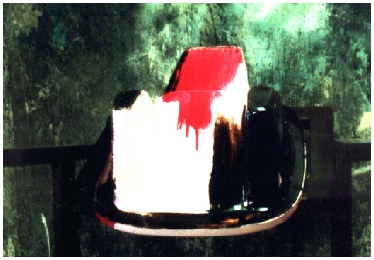
Plastic | Wood | Paint  

Title Re-distribution of knowledge

       Date 2002

       By Ranjit Singh

Redistribution of Knowledge


Art Concept: Redistribution of Knowledge


Original Manifestation: Multimedia Installation / Social Practice (Destroyed, June 2002)


Current State: Digital Archive and Conceptual Illustration


Conceptual Framework

The title Redistribution of Knowledge directly references and challenges the socio-economic premise of the "redistribution of wealth." The core thesis argues that any attempt to reallocate financial resources without simultaneously fostering economic literacy and critical consciousness is fundamentally non-functional. Without a deep understanding of systemic economic processes, wealth redistribution merely displaces, rather than dismantles, the state of underdevelopment.


The work posits that the deliberate restriction, control, and manipulation of information are the primary mechanisms used to maintain global and localized marginalization. Therefore, the true currency of liberation is not capital alone, but the democratized access to knowledge.


Methodology and Materiality

“This piece of art represents a process of self-sufficiency—a method that allows me to use disregarded material (rubbish) from council estates to create art, art that would finance further education and community art engagement.”


The physical artwork was rooted in a circular, self-sustaining economy of materials and social purpose. By harvesting discarded materials—literally "rubbish"—from municipal housing estates, the artist transformed systemic neglect into creative capital. The ultimate objective of the artwork was utilitarian and revolutionary: the sale of these transformed objects was designed to directly fund accessible higher education and community arts initiatives, bypassing traditional institutional gatekeepers.


Provenance and the Living Archive

In June 2002, the original physical manifestation of this methodology was lost. Following the takeover of the artist’s studio space—located on the ground floor of Shelly Tower, a council block in Northfield, Birmingham—by a charitable organization, the artwork was discarded.


Despite the destruction of the physical artifact, the artist maintains that the process itself was a success, proving that art can serve a tangible, multi-layered socio-political purpose.


Recognizing that the commercial art market is inherently volatile and rarely embraces deeply political, socially inclusive practices, the artist has transitioned this project into an ongoing digital preservation initiative. By archiving past works and illustrating these foundational concepts online, the project evolves from a localized physical installation into an open-source, globally accessible site for public engagement.


Key Themes

Socio-Economic Autonomy: Creating independent financial pipelines for education through artistic production.


Radical Upcycling: Utilizing the detritus of marginalized urban spaces to critique the structures that abandoned them.


The Ephemeral vs. The Archive: Subverting the loss of physical art by democratizing the concept through digital permanence.


Page

1

2

3

4