Through the installation Commodification Cycle, the artist examines the transformation of art into a market-driven product by incorporating the language, systems, and presentation strategies associated with industrial mass production and commercial retail culture. The work challenges distinctions between artistic expression and consumer commodity, positioning the artwork within structures more commonly associated with manufacturing, branding, and investment.
Each piece within the installation is accompanied by commercial terminology typically found on mass-produced products, including the statement: “If you are not entirely satisfied with this product, return to place of purchase for a full refund.” By appropriating the language of consumer guarantees and product assurance, the work critiques the increasing expectation that contemporary art should function as a secure economic investment as much as a cultural or conceptual object.
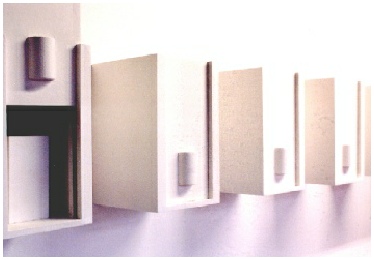
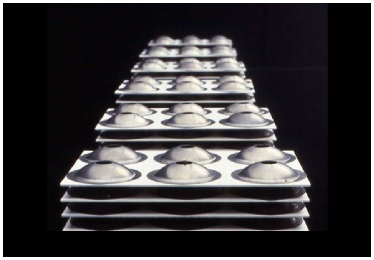
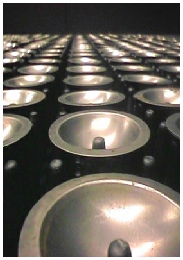
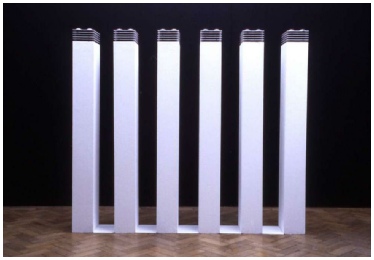
The installation consists of multiple mass-produced components physically supported by structural frameworks that symbolically reference financial systems, institutional backing, and economic mechanisms that sustain the value of artworks within the global art market. Additional trays of identical discs are incorporated into the installation to replace sold works, reflecting the pressures placed upon artists to continually reproduce marketable products in response to demand. Through this process, the artist investigates the role of contemporary artists as manufacturers operating within systems governed by exclusivity, scarcity, and commercial circulation.
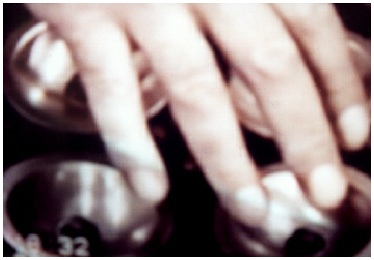
Ownership forms a central aspect of the project. The name of each purchaser is documented, reinforcing the relationship between economic structures and exclusivity within the art market. Upon purchase, each disc is individually thumb-printed by the artist, emphasising the fragile boundary between handcrafted authenticity and industrial product. The issuing of receipts and the cataloguing of transactions further embed the artwork within systems of commerce, bureaucracy, and financial exchange. In this context, the price of each work is determined through market forces of supply and demand, mirroring broader capitalist structures that shape cultural value.
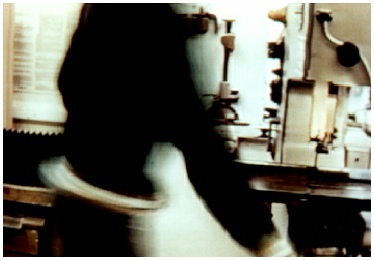
Accompanying video works extend these themes by documenting the repetitive process of installing large numbers of visually identical pieces. The monotony of repetition references the psychological and physical conditions associated with industrial labour and manufacturing environments, drawing attention to the mechanisation of production within contemporary cultural industries.
Through the integration of digital and tracking technologies, the artist additionally proposes the development of an integrated system capable of monitoring the circulation and ownership of individual artworks. This speculative extension of the project reflects ongoing concerns surrounding surveillance, ownership, authenticity, and the increasing convergence of art, commerce, and technological control systems.